Robusta coffee in Kenya
Kenya is an Arabica country. The overwhelming majority of the national crop is washed Arabica from the highlands, and Robusta is a small and much less documented part of the picture. It grows at lower altitudes, mostly in the west, and is rarely sold under a Kenyan single-origin label.
That matters if you are sourcing. Large volumes of Robusta offered as Kenyan are worth a question about where the coffee was actually grown, because East Africa's Robusta crop is centred on Uganda and the Lake Victoria basin rather than on Kenya.
This page covers how Robusta is graded and specified, and the container arithmetic that catches people out. For what we can offer against a given spec, ask.
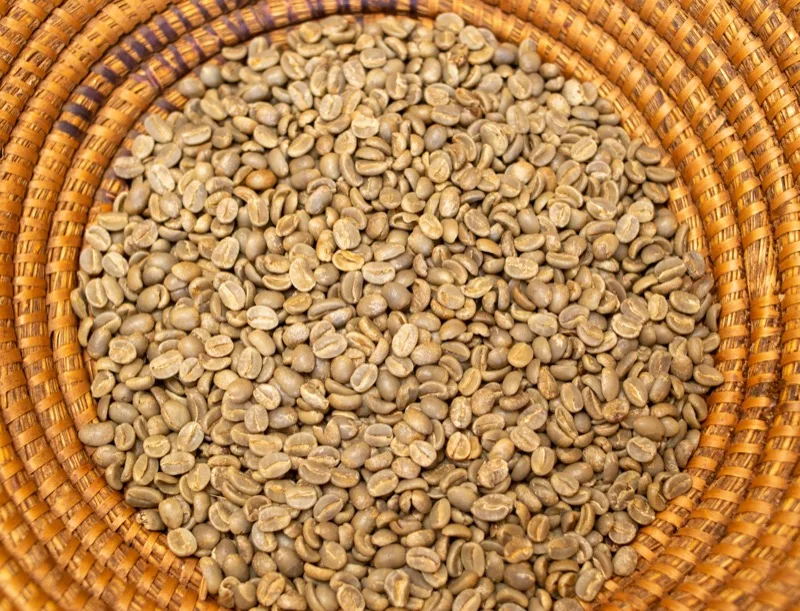
Sorted by screen, not by cup
Robusta is bought on size, moisture, defect count and price rather than on a cupping score. That makes the specification shorter than an Arabica contract and the tolerances more important. Tell us your maximum defect count and moisture ceiling and we will quote against them.
| Grade | Screen | What it is | Typically used for |
|---|---|---|---|
| Screen 18 / AA | 18 | The largest screen. Cleanest and most uniform. | Espresso base, premium blends |
| Screen 16 / A | 16 | The volume grade. Most Robusta programmes run here. | Espresso base, blends |
| Screen 14 / B | 14 | Smaller bean, lower price, still washed or clean natural. | Blends, soluble |
| UG Robusta 1–3 | — | Uganda's national classification bands, quoted where a buyer contracts to that standard. | Soluble, commercial |
We also supply Bugisu Arabica from the slopes of Mount Elgon on the Ugandan side, which is a washed Arabica, not a Robusta, and is quoted separately.
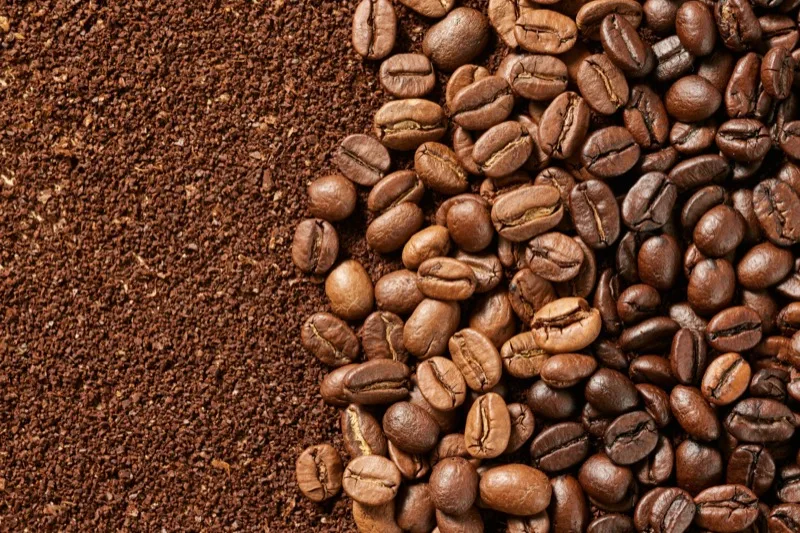
How Robusta is priced
Robusta trades against the London terminal market (the ICE Robusta futures contract), with a differential on top for origin, screen, defect count and certification. The differential is where the negotiation actually happens; the terminal price is simply the weather everyone stands in.
That is why no serious offer quotes a flat number that holds for weeks. A quote is the terminal plus a differential, valid for a stated window, and it moves when London moves. Anyone quoting Robusta as a fixed price without reference to the terminal is either taking a large margin for the risk or not intending to ship.
What it is used for
Robusta carries roughly twice the caffeine of Arabica, less sugar and less acidity, and it produces the stable crema that espresso blends rely on. The classic Italian espresso base is a Robusta-Arabica blend for exactly that reason.
The other large buyer is the soluble industry: instant coffee is mostly Robusta because extraction yields are higher and the price supports the economics. Between those two sit the commercial blends, where Robusta adds body and keeps the blend cost workable.
What actually fits in a container
Green coffee is weight-limited, not volume-limited. A container fills up on the scale long before it fills up on space, which is why coffee moves in 20 ft boxes and why a 40 ft box is usually the wrong tool. Green coffee ships in 60 kg bags out of East Africa.
| Container | Bags (60 kg) | Net coffee | Why |
|---|---|---|---|
| 20 ft | 300–320 | 18.0–19.2 t | The standard green coffee load. Comfortably inside the box's payload and inside road weight limits at most destinations. |
| 40 ft | ~440 max | ~26.5 t max | A 40 ft box has roughly twice the space but only about 26.7 t of payload once you subtract its tare from the 30,480 kg gross limit. You run out of weight with a third of the container empty, and many destinations cap road haulage lower still. |
If you see a 40 ft quoted at 640 bags or 38 t, the arithmetic has been done on volume and ignores the payload limit. That load cannot legally move on the road at either end. We quote 20 ft unless you specifically need otherwise.
The short version
Robusta contracts are simpler than Arabica ones, which means the few numbers in them carry more weight. These are the fields we expect to agree before a quote is firm.
Prices are quoted per contract against the prevailing market and are not published here. They move with the London Robusta market, freight and FX, so any figure on a web page would be wrong by the time you read it.
- Bag
- 60 kg, sisal or GrainPro-lined on request
- Moisture
- Contracted ceiling, typically 12–13% for Robusta
- Defects
- Agreed maximum count per sample, to your standard
- Process
- Natural, some washed
- Port
- FOB Mombasa (Dar es Salaam on request)
- Documents
- Certificate of origin, phytosanitary certificate, weight and quality certificates, bill of lading
What a defect count actually counts
Robusta contracts stand on two numbers, and it is worth knowing what sits behind them. The defect count is taken on a weighed sample and tallies black beans, sour and fermented beans, insect damage, broken pieces, pods and foreign matter, each weighted by how badly it hurts the cup. Black and sour beans matter most; a handful of them taints a roast in a way a few broken pieces never will.
The second number is moisture. Too wet and the coffee risks mould and loses weight in transit that you paid for at origin; too dry and it has been over-held. The contracted ceiling is checked at loading, not just at purchase, because Robusta picks up moisture in humid storage faster than buyers expect.
From the basin to the water
Most East African Robusta is dried in the sun as whole cherry, then hulled dry rather than washed. After hulling it is graded over screens, bagged, and moved to the coast: from the Lake Victoria basin that means roughly 1,200 km by road or rail to Mombasa, or the southern route to Dar es Salaam.
The transit leg is where good Robusta gets spoiled cheaply, through wet bags, heat, and time in the wrong warehouse. It is also why the practical questions in an offer are unglamorous ones: when was it hulled, where has it been stored, and what did it measure at the warehouse door rather than at the farm gate.
Arabica and Robusta, side by side
The two species are different crops with different economics, and most of the practical questions buyers ask trace back to this table.
| Arabica | Robusta | |
|---|---|---|
| Species | Coffea arabica | Coffea canephora |
| Grown at | 1,300–1,900 m in Kenya | Sea level to ~900 m |
| Caffeine | ≈ 1.2–1.5% | ≈ 2.2–2.7% |
| In the cup | Acidity, aromatics, sweetness | Body, bitterness, stable crema |
| Priced against | New York “C” futures | London Robusta futures |
| Sold on | Cup score and grade | Screen, defects, moisture |
| In East Africa | Kenya, Ethiopia, highland Tanzania | Uganda, lowland Tanzania |
The caffeine difference is why Robusta plants tolerate pests that ruin Arabica, and why an espresso blend with Robusta in it kicks the way it does.
So is there Kenyan Robusta at all?
A little, and it is honest to say only a little. Robusta needs low altitude and steady warmth, which in Kenya means pockets of the western lowlands rather than the highland belts the country is famous for. The volumes are small, rarely marketed as single origin, and they play no meaningful part in Kenya’s export statistics, which are overwhelmingly washed Arabica.
In practice, East African Robusta programmes are built on Uganda, and the paperwork says so: a Ugandan lot ships with a Ugandan certificate of origin whether it leaves through Mombasa or Dar es Salaam. If someone offers you container volumes of “Kenyan Robusta”, ask for that certificate before anything else. The answer settles the question faster than any sales conversation.
Get in touch
Tell us which coffee you are interested in and we will come back to you with what is available, what it costs and how soon it can ship. A grade and a rough volume is enough to start.
You deal directly with Salome Bisau, in English, Swahili or French. salome@balbans.com · +254 706 588 575