Where Kenyan coffee grows
Coffee is grown across a broad belt of the Kenyan highlands, on both sides of the Rift Valley, wherever the altitude and the rainfall allow it. The counties below are grouped by growing region, because coffee from the same region tends to share a character far more than coffee from counties that merely border each other.
The single biggest determinant is which side of the country you are on. The Mount Kenya and Aberdare counties give the hard, blackcurrant-driven acidity Kenya is famous for. The western counties, on the Mount Elgon and Kisii highlands, run rounder and softer.
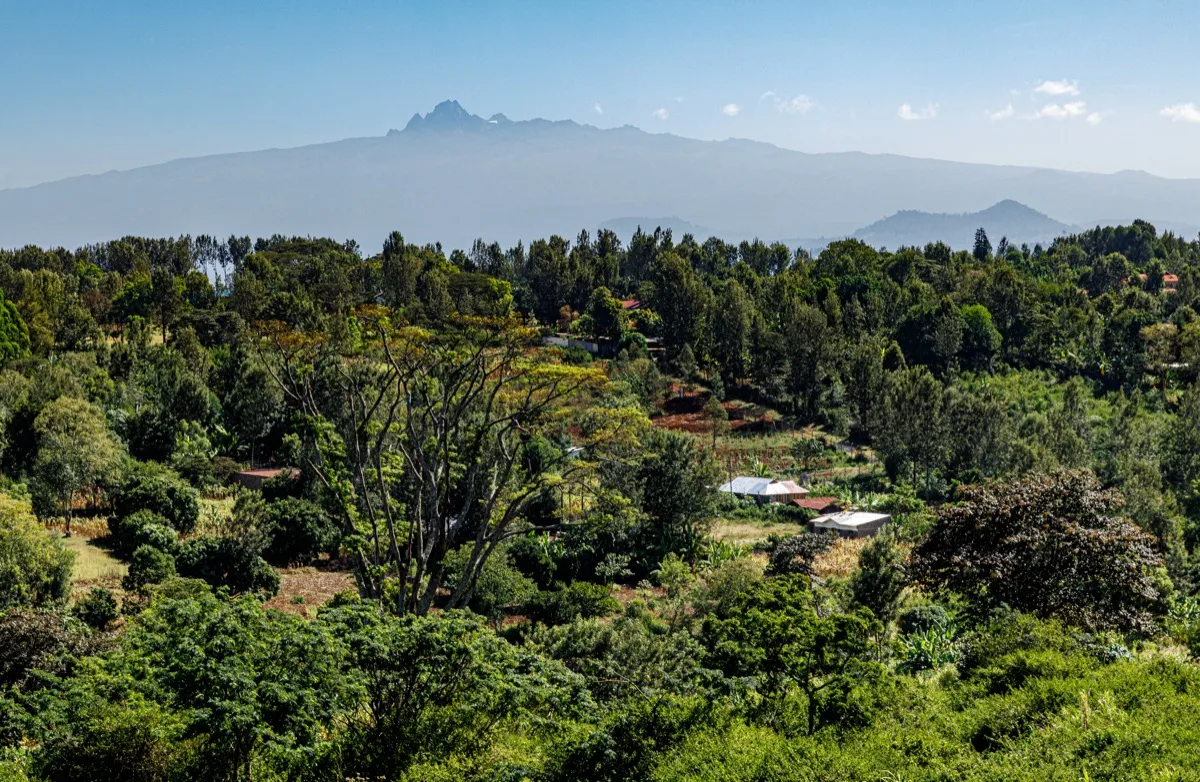
Central highlands: Mount Kenya and the Aberdares
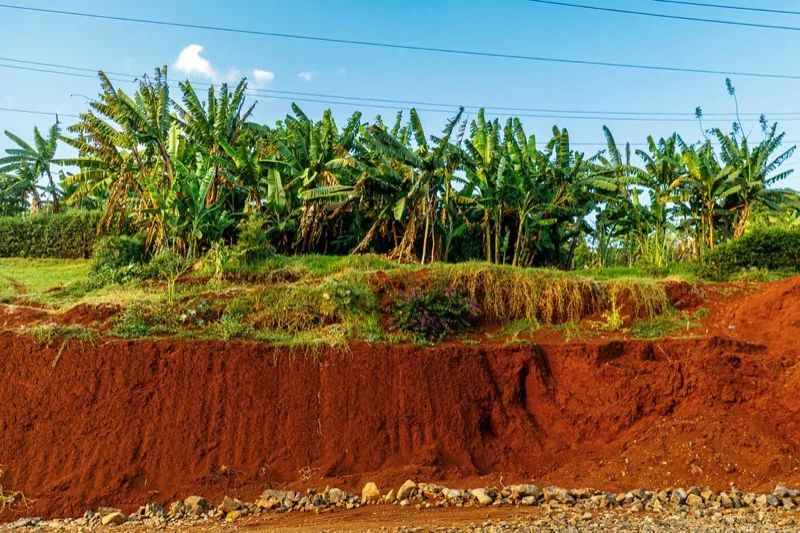
The heartland. Deep red volcanic laterite, high altitude, and the densest concentration of cooperative wet mills in the country. If a cup is described as “classic Kenyan”, this is where it comes from.
| County | Altitude | In the cup | Notes |
|---|---|---|---|
| Nyeri | 1,600–1,900 m | Dense, structured, blackcurrant and dark berry, firm acidity | The reference point for Kenyan coffee. |
| Kirinyaga | 1,300–1,900 m | Bright, citric, floral; often the cleanest acidity | Very high density of cooperative factories. |
| Murang'a | 1,350–1,800 m | Sweet, juicy, red-fruit leaning | Large smallholder base south of Nyeri. |
| Kiambu | 1,500–1,800 m | Balanced, chocolate-leaning, gentler acidity | Estates as well as smallholders. Under pressure from Nairobi's expansion. |
| Embu | 1,300–1,800 m | Rounder, softer fruit, moderate acidity | South-eastern Mount Kenya. Smaller volumes. |
| Meru | 1,300–1,950 m | Bright and clean, citrus and stone fruit | North-eastern slopes of Mount Kenya. |
| Tharaka-Nithi | 1,200–1,700 m | Softer, sweet, lighter acidity | Between Embu and Meru. |
| Nyandarua | 1,800–2,100 m | Very dense, sharp, slow-developing | High and cold; the marginal upper edge of the belt. |
Western Kenya: Mount Elgon, Kisii and the Rift
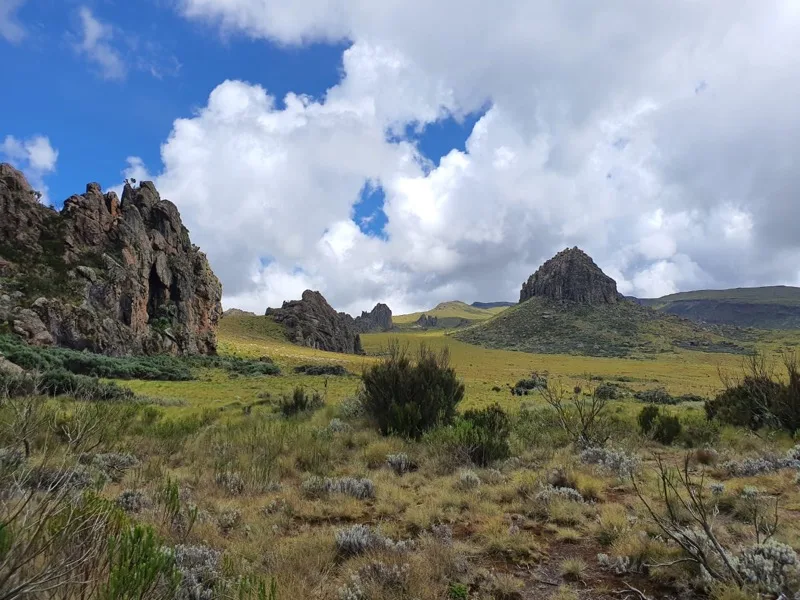
A different massif and a different rainfall pattern, and the cup shows it. Western Kenyan coffee is rounder and softer, closer in character to Ugandan Bugisu than to Nyeri. Mount Elgon is a single volcano, and the border with Uganda runs across it.
| County | Altitude | In the cup | Notes |
|---|---|---|---|
| Trans-Nzoia | 1,500–1,900 m | Fuller body, softer acidity, sweet finish | Kitale is the county's centre. Better known nationally for maize than coffee. |
| Bungoma | 1,400–1,800 m | Sweet, medium acidity, chocolate finish | Mount Elgon's Kenyan slopes. |
| Kisii | 1,500–1,800 m | Soft, sweet, gentle acidity | South-western highlands, heavy rainfall. |
| Nyamira | 1,500–1,850 m | Similar to Kisii; clean and mild | Adjacent to Kisii, same growing conditions. |
| Kakamega · Vihiga | 1,300–1,700 m | Mild, low acidity, fuller body | Lower and wetter. Small volumes. |
| Nandi · Kericho · Bomet | 1,500–1,900 m | Clean, balanced, medium body | Tea country that also grows coffee. |
| Elgeyo-Marakwet · Baringo · West Pokot | 1,500–1,900 m | Bright, lighter body | Rift escarpment. Small and scattered. |
Eastern and southern counties
Lower, drier and more marginal for coffee, but they produce, and in a dry year they can behave very differently from the Mount Kenya belt.
| County | Altitude | In the cup | Notes |
|---|---|---|---|
| Machakos · Makueni | 1,400–1,700 m | Lighter body, softer acidity | Ukambani hills, drier and lower. |
| Taita-Taveta | 1,400–1,800 m | Distinctive, floral, medium body | Taita Hills, an isolated pocket in the south-east. |
| Nakuru · Laikipia | 1,700–2,000 m | Dense, bright, firm | Central Rift, largely estate-grown. |
| Kisumu · Homa Bay · Migori | 1,300–1,600 m | Mild, low acidity | Lake basin. Marginal, small volumes. |
Altitude bands describe the coffee-growing land in each county, not a guaranteed figure for a given lot. Cup characters are the typical regional profile, not a claim about a specific lot. Lot-level cupping notes come with the sample.
The counties we buy in
Of the counties above, we source directly from Nyeri, Kirinyaga, Embu, Kiambu and Trans-Nzoia, marked in bold in the tables. Those are the ones where we hold relationships with cooperative societies and factories, which is a more useful claim than listing every county in Kenya that grows a coffee tree.
If you need a county we do not currently buy in, say so. We will tell you honestly whether we can reach it for the volume you need.
See also Kenyan Arabica grades.
Get in touch
Tell us which coffee you are interested in and we will come back to you with what is available, what it costs and how soon it can ship. A grade and a rough volume is enough to start.
You deal directly with Salome Bisau, in English, Swahili or French. salome@balbans.com · +254 706 588 575